
Most People Spend Decades Saving for Retirement…
…but only a few hours estimating what retirement will actually cost.
Sarah was 62 years old when she finally opened a spreadsheet titled “Retirement Budget.”
She listed her expected Social Security income.
Her 401(k).
A small pension.
Property taxes.
Groceries.
Travel.
Utilities.
Everything looked manageable.
Then her financial advisor asked one simple question.
“How much do you expect to spend on healthcare each year after you retire?”
Sarah paused.
She had no answer.
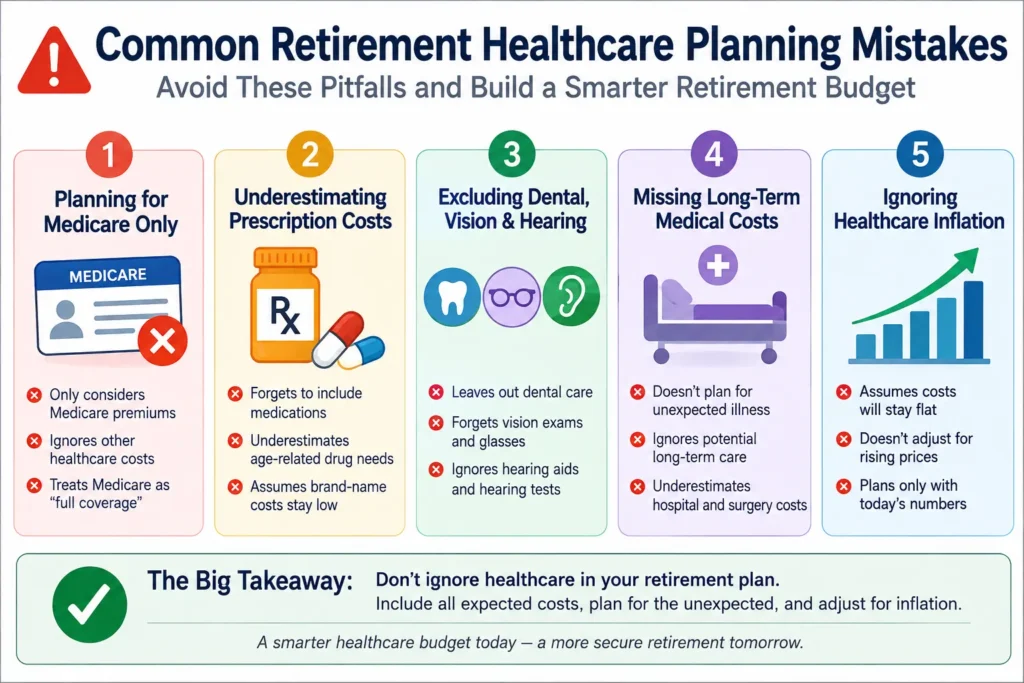
Like millions of Americans, she assumed Medicare would take care of most of it.
She knew she’d pay a monthly premium.
Beyond that, she hadn’t thought much about prescriptions, dental work, vision care, hearing aids, or the possibility that healthcare costs might rise faster than inflation.
That single conversation changed her retirement plan.
Not because she needed millions of dollars more.
But because she finally understood that healthcare isn’t a one-time expense.
It’s a lifelong budget.
Why Healthcare Is So Difficult to Estimate
Most retirement expenses are relatively predictable.
If your mortgage is paid off, you can estimate housing costs.
You can estimate food, transportation, insurance, and utilities with reasonable confidence.
Healthcare is different.
It depends on factors you can’t fully control:
- Your health
- Your spouse’s health
- Prescription medications
- Inflation
- Medicare choices
- Unexpected illnesses
- Long-term care needs
This uncertainty causes many people to do one of two things.
Some assume healthcare will be inexpensive.
Others assume the worst and believe they need millions more than they actually do.
Neither approach is helpful.
The goal isn’t to predict the future perfectly.
The goal is to create a realistic range that allows your retirement plan to absorb surprises.
Think in Annual Costs—Not Lifetime Costs
You’ll often hear headlines like:
“The average retired couple may need hundreds of thousands of dollars for healthcare.”
While technically useful, numbers like these can feel overwhelming.
They also don’t help you build a monthly retirement budget.
Instead, start with annual expenses.
Ask yourself:
- How much will I spend this year?
- What happens if costs rise next year?
- How will that change in my 70s?
- What might my healthcare budget look like in my 80s?
Breaking healthcare into yearly estimates makes the problem manageable.
It’s much easier to adjust a yearly budget than to react to one intimidating lifetime figure.
Step 1: Estimate Your Medicare Premiums
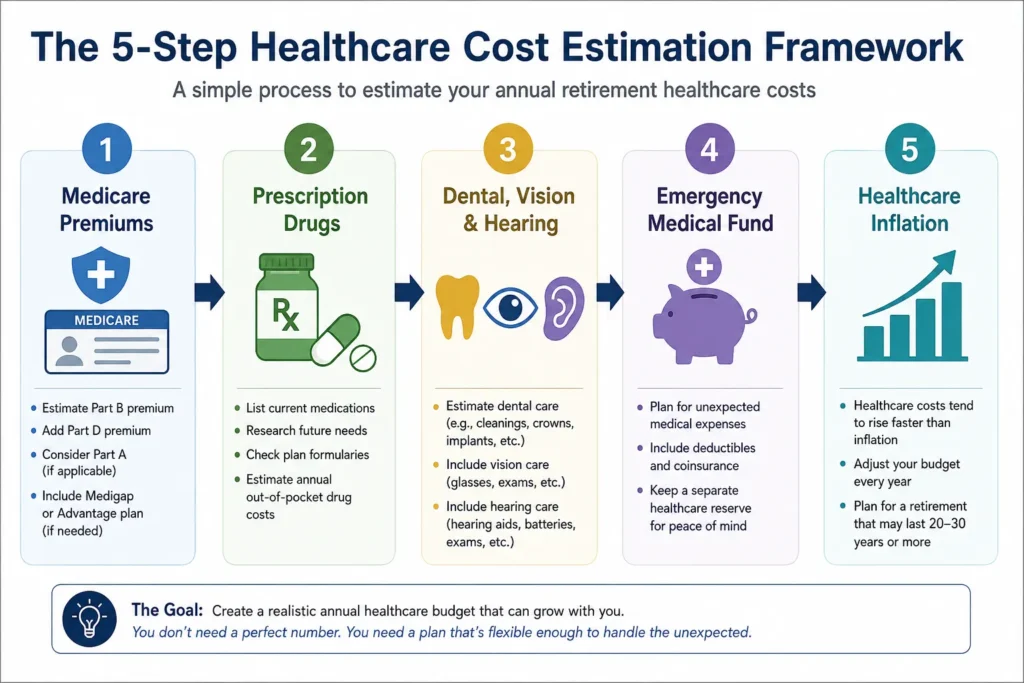
Every retirement healthcare budget should begin here.
Most retirees will pay monthly premiums for Medicare coverage.
Your actual amount depends on factors such as:
- Income
- Coverage choices
- Medicare Advantage vs. Original Medicare
- Prescription drug coverage
- Supplemental insurance
These premiums become fixed monthly expenses, much like property taxes or homeowners insurance.
Instead of treating them as unexpected bills, include them in your core retirement budget from day one.
Step 2: Estimate Your Prescription Drug Costs
Many retirees focus on doctor visits but overlook medications.
Yet prescription costs often increase gradually over time.
Even a small number of maintenance medications can become a meaningful annual expense.
When estimating future costs, consider:
- Current medications
- Family health history
- Potential age-related prescriptions
- Generic versus brand-name drugs
- Annual changes in drug pricing
Healthcare planning isn’t about predicting every medication you’ll need.
It’s about recognizing that prescription spending usually rises—not falls—as retirement progresses.
Step 3: Budget for the Expenses Medicare Doesn’t Fully Cover
This is where many retirement budgets quietly fall apart.
Even with excellent Medicare coverage, retirees frequently pay for services that are only partially covered—or not covered at all.
Include realistic annual estimates for:
- Dental care
- Vision exams and glasses
- Hearing tests and hearing aids
- Over-the-counter medical supplies
- Mobility and wellness equipment
These costs rarely arrive all at once.
Instead, they appear gradually over many years, making them easy to underestimate.
And because they’re often paid out of pocket, they can quietly reduce the money available for travel, hobbies, or time with family.
Step 4: Build a Healthcare Emergency Fund
Even the best healthcare budget won’t eliminate surprises.
A specialist you didn’t expect.
An unexpected outpatient procedure.
A new prescription medication.
A medical device that isn’t fully covered.
These expenses don’t necessarily mean your retirement plan has failed.
They simply mean healthcare is unpredictable.
That’s why your retirement plan should include two different safety nets:
- A general emergency fund for unexpected life events.
- A dedicated healthcare reserve for medical expenses.
Keeping these funds separate makes it easier to understand whether rising healthcare costs are becoming a long-term trend or simply a temporary setback.
Step 5: Don’t Forget Healthcare Inflation
Many retirees assume that once they estimate today’s medical costs, they’re finished.
In reality, today’s estimate is only the starting point.
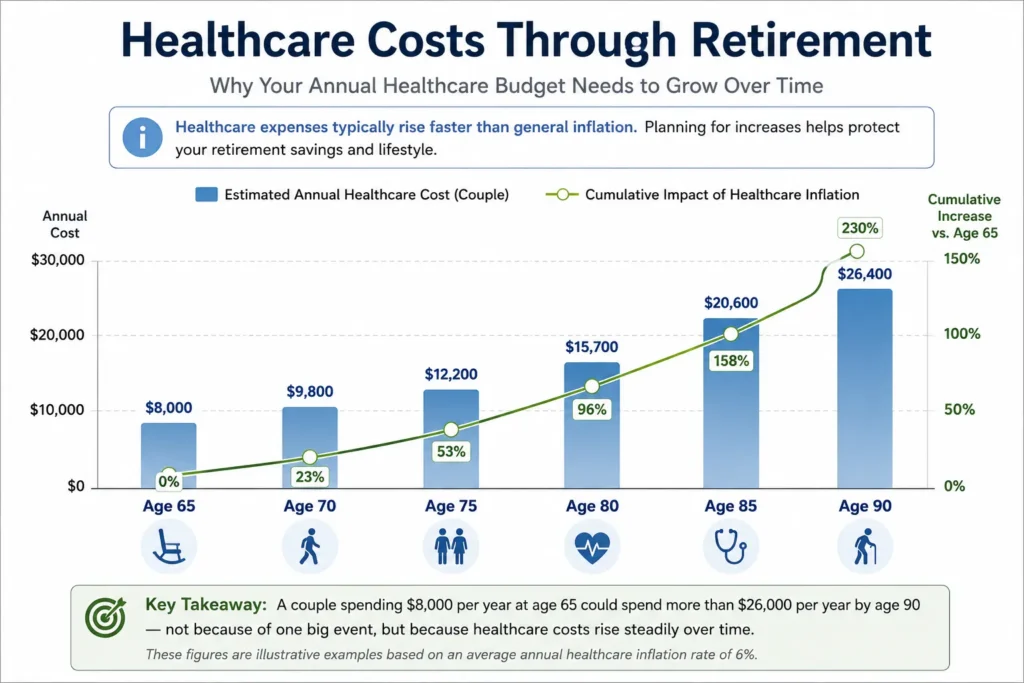
Healthcare expenses have historically tended to increase faster than general inflation over long periods.
A retirement that lasts 25 or 30 years gives those increases plenty of time to compound.
When building your retirement plan, avoid assuming medical costs will remain flat.
Instead, review your healthcare budget every year and adjust it as your circumstances, coverage, and medical needs change.
A flexible plan is usually more valuable than a perfectly precise one.
Build Your Personal Healthcare Budget
Instead of asking,
“How much healthcare will cost me during retirement?”
Ask,
“What will healthcare probably cost me next year?”
Then repeat that exercise every year.
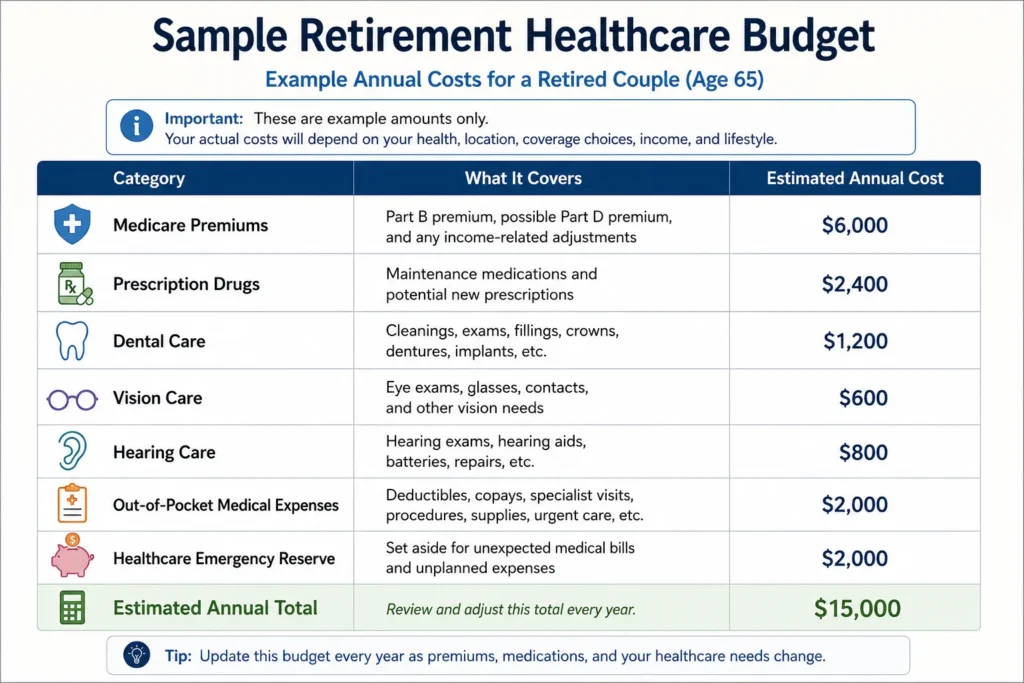
A simple worksheet might look like this:
| Category | Estimated Annual Cost |
|---|---|
| Medicare premiums | ______ |
| Prescription drugs | ______ |
| Dental care | ______ |
| Vision care | ______ |
| Hearing care | ______ |
| Out-of-pocket medical expenses | ______ |
| Healthcare emergency reserve | ______ |
| Estimated Annual Total | ______ |
Notice what’s missing.
There isn’t a category called “perfect estimate.”
Retirement planning isn’t about predicting every dollar correctly.
It’s about preparing for the range of outcomes that are most likely.
The Biggest Mistake Isn’t Underestimating Costs
Surprisingly, the biggest mistake isn’t always estimating too little.
It’s never calculating healthcare costs at all.
Many retirees spend years calculating investment returns to the nearest percentage point while never creating even a rough estimate for healthcare.
That’s like planning a cross-country road trip without checking how much fuel you’ll need.
You might still reach your destination.
But the journey will be much more stressful than it needed to be.
Frequently Asked Questions
Should I include long-term care in my retirement healthcare budget?
Yes.
Even if you decide not to purchase long-term care insurance, your retirement plan should acknowledge that long-term care could become one of your largest lifetime expenses.
How often should I update my healthcare budget?
At least once a year.
Review it whenever Medicare premiums change, your medications change, or your overall health changes.
Should healthcare be part of my emergency fund?
It’s generally better to create a separate healthcare reserve.
Medical expenses tend to follow different patterns than other unexpected household costs.
Is Medicare enough for most retirees?
Medicare provides valuable coverage, but it doesn’t eliminate healthcare expenses.
Premiums, prescriptions, dental care, vision, hearing, and out-of-pocket costs still need to be included in your retirement budget.
What matters more: the exact number or the planning process?
The planning process.
No one can predict every future medical expense, but retirees who regularly review and adjust their healthcare budget are usually better prepared than those chasing a perfectly accurate estimate.
Final Thoughts
Healthcare costs aren’t impossible to estimate.
They’re simply impossible to estimate perfectly.
And that’s okay.
A successful retirement plan doesn’t require perfect predictions.
It requires enough flexibility to handle the unexpected without forcing you to change the life you’ve spent decades preparing for.
The retirees who worry the least about healthcare aren’t the ones who guessed every future expense correctly.
They’re the ones who built a plan that could adapt when life inevitably changed.
Retirement Playbook
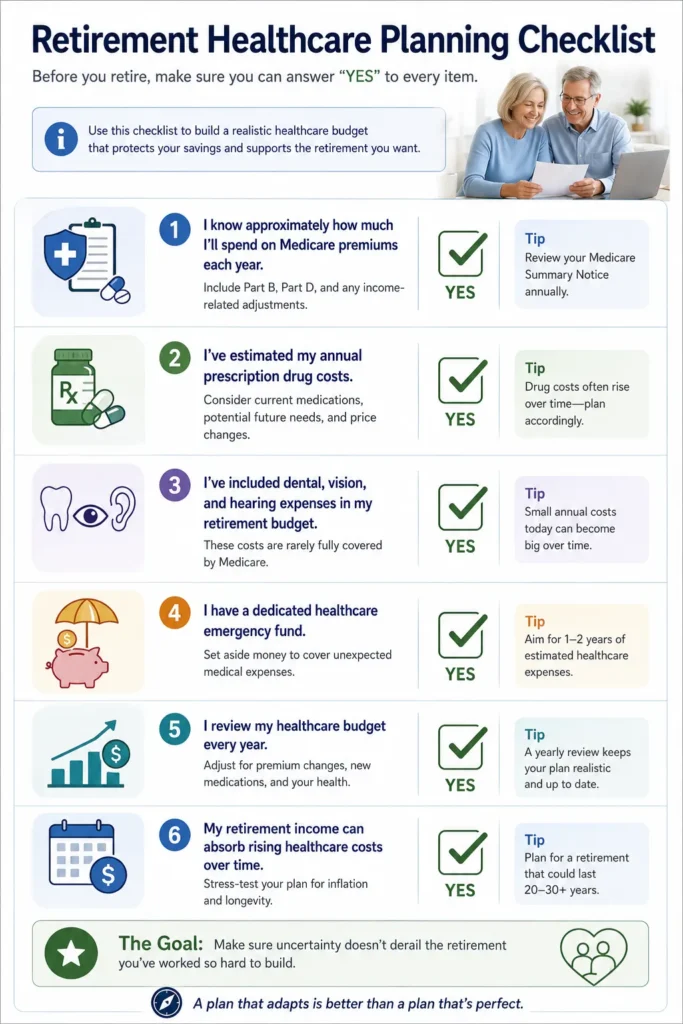
Before you retire, make sure you can answer “yes” to each of these questions.
☐ I know approximately how much I’ll spend on Medicare premiums each year.
☐ I’ve estimated my annual prescription drug costs.
☐ I’ve included dental, vision, and hearing expenses in my retirement budget.
☐ I have a dedicated healthcare emergency fund.
☐ I review my healthcare budget every year.
☐ My retirement income can absorb rising healthcare costs over time.
Healthcare planning isn’t about eliminating uncertainty.
It’s about making sure uncertainty doesn’t derail your retirement.
Coming Next
Medigap vs. Medicare Advantage: Which One Is Better for Your Retirement?